The season of preaching ‘road safety’ messaging
Just a quick thing...
I have chosen not to use adverts, pop-ups, mailing lists, or mandatory subscriptions, but it means there is an ongoing cost for me in researching and writing content, and generally advocating for active travel - time spent not working! If you can throw a few pounds my way to help out, your support is gratefully received! Thank you!

The clocks have gone back, Christmas adverts are on the TV, nights are drawing in – it can only mean one thing: it’s time for official ‘road safety’ organisations to preach their annual messages of “be safe, be seen” to people travelling outside of motor vehicles, and (if we’re lucky) *asking* drivers to please – pretty please – drive carefully.
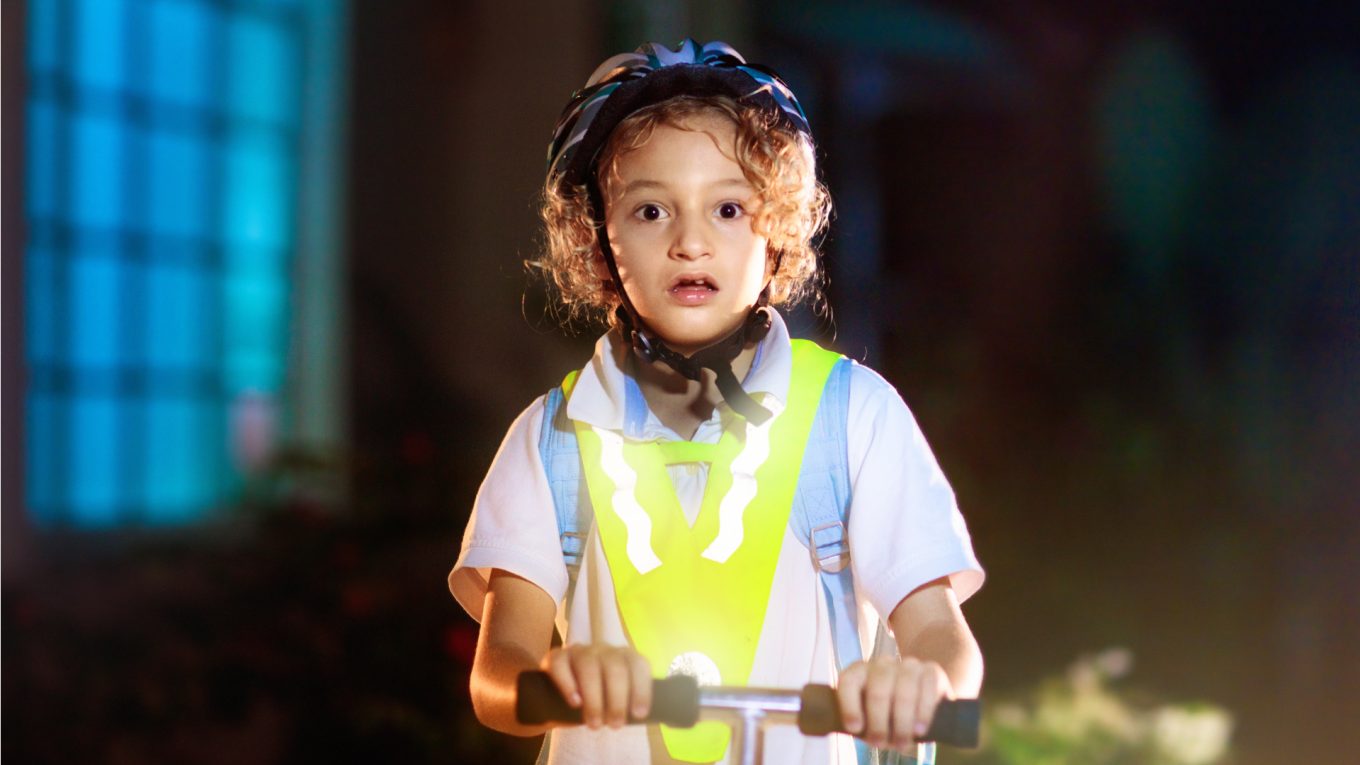
Warwickshire Road Safety Partnership recently published the following social media post which is perhaps typical of the sort of communications – they note that children can struggle to judge vehicle speed and distance, that they can be easily distracted, but the first thing they suggest to mitigate the risk is parents adding high-visibility materials to coats and/or bags. While they do “urge” drivers to slow down and look out for people on pavements and crossing, they suggest that children are difficult to spot and may appear suddenly. In short, the post is putting responsibility predominantly on children to be safe and mitigates driver responsibility somewhat by saying children can appear without warning.
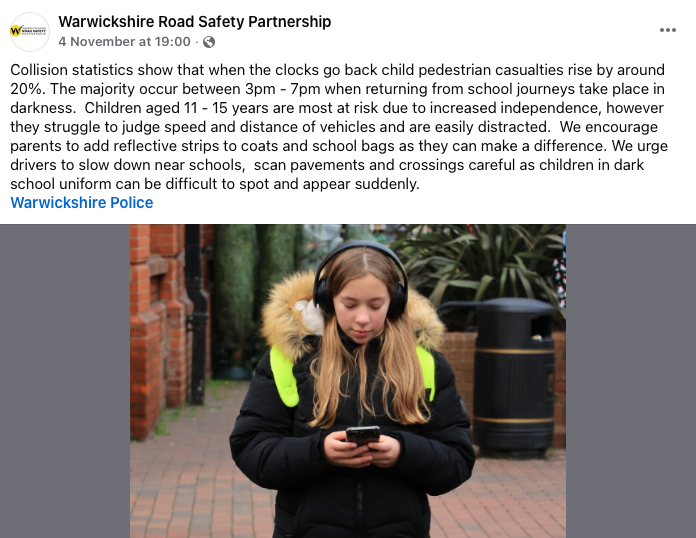
The issue here is that children are children (duh), and no matter how much road safety is drilled into them by parents, guardians, teachers etc., they are prone to poor judgements, mistakes, and bad decisions – this is ultimately how people learn. Indeed, they also learn by example. In the accompanying photograph we see a child wearing headphones, head in a screen, seemingly oblivious to her surroundings. This is certainly not sensible, but how many adults do exactly the same thing?
Ultimately, road safety means acknowledging natural human limitations and implementing infrastructure that ensures that people – whether children or adults – are not seriously injured or killed when things go wrong. This means lower speed limits and better road layouts to enforce slower driving; well-maintained, good quality, level pavements with clear indications of priority when crossing roads; high quality separated cycling infrastructure also with clear priorities when interacting with roads or footpaths.
It also means drivers being told in no uncertain terms that streets are for everyone not just drivers; that people rarely suddenly appear out of nowhere; there’s no obligation on anyone to wear high visibility, reflective, or otherwise illuminated clothing and omitting it does not make them invisible, especially in urban environments; and being given very clear instructions (not polite requests) to pay close attention and only drive at a speed suitable for conditions, where they can stop in the distance absolutely known to be clear – even if that means travelling below the speed limit. Of course, none of this should come as a surprise given the power and responsibility taken on when getting behind the wheel, though given how some behave when driving, stark reminders would appear necessary.
Yes, of course pedestrians and cyclists also have a responsibility to keep themselves safe, but people – especially children – must be allowed to make mistakes and exercise poor judgement from time to time, and to be able to walk (or cycle) away from the experience having learnt a lesson while not suffering serious consequences.
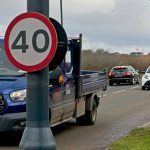
In Warwickshire, people are not afforded that right. We still see road schemes with inadequate walking, wheeling, and cycling infrastructure; where cycle routes are provided, they’re not joined up in a cohesive network; long planned schemes are mothballed if not outright cancelled; a key route to a new school in Nuneaton still sits at a 40mph speed limit; pavements can be narrow, crumbling, uneven, or obstructed by motor traffic or street clutter.
There is so much that could be done to actually improve the safety of people outside of cars alongside increasing the attractiveness of travelling by walking, wheeling, and cycling, but which isn’t done – not just in Warwickshire but up and down the country with some exceptions. As long as that is the case, messages similar to this which appear to care about and promote road safety, ring extremely hollow.
As a final point – the picture choice here is curious. While big headphones blocking out sound, and smartphones distracting attention is not a particularly sensible choice when navigating streets, let’s not forget that not everybody can hear or hear well; not everybody can see or see well. Diminished senses do not absolve drivers of responsibility in helping to keep other road users safe.
Have you found this content interesting or useful? If so, and if you are able to, any contributions are greatly appreciated! Thank you! Oh, and do please share with others!